
In the contemporary landscape of digital innovation,
AI is accelerating enterprise decisions at unprecedented speed. But beneath the momentum lies a vulnerability most boards aren’t confronting.
AI scales insight, but it also scales error, bias, and unverified assumptions. The Core Problem
For the past decade, organizations focused on data aggregation: data lakes, cloud migration, ERP consolidation, and AI copilots.
But aggregation isn’t verification. AI systems are only as reliable as the data they consume. When underlying records lack traceability or validation, AI outputs become governance risk, not strategic advantage.
The conversation must shift:
FROM: “How do we deploy AI across the enterprise?”
TO: “Is our data infrastructure defensible under audit and regulatory scrutiny?”
Regulatory Reality
Across jurisdictions, frameworks are converging toward structured transparency:
- Corporate Sustainability Reporting Directive
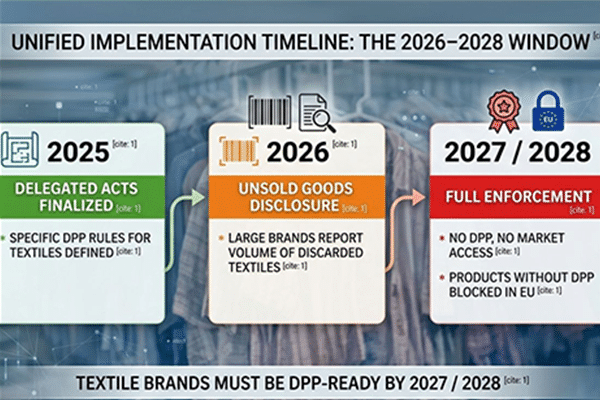
- Ecodesign for Sustainable Products Regulation
- FSMA 204 Food Traceability Rule
They all require the same thing: verifiable, structured, accessible lifecycle data.
AI-driven reporting built on unverifiable data won’t withstand regulatory scrutiny. Or satisfy institutional investors focused on governance maturity.
At its core, blockchain technology facilitates immutable and transparent record-keeping, ideal for tracing the journey of goods, data, or assets. However, when integrated with edge computing, which processes data near the source rather than in distant data centers, its potential magnifies exponentially.
- What Intelligent Transparency Actually Means Four essential elements: Verifiable data capture – Events recorded with structural integrity
- Clear data lineage – Tracing how information was created and used
- Governed AI deployment – Accountability for AI-informed decisions
- Real-time accessibility – Infrastructure for rapid regulatory response
Without these, AI is acceleration without guardrails.
Why This Is Strategic Now
AI is moving into high-stakes domains: sustainability reporting, supply chain risk scoring, financial forecasting, compliance validation, and operational automation.
When these outputs inform disclosures, boards assume fiduciary exposure.
Verifiable infrastructure is no longer optional modernization. It’s governance control.
The Five-Year Outlook
We’ll see:
- AI governance integrated into audit committees
- Data lineage assessed during due diligence
- Infrastructure maturity influencing valuations
- Transparency capability shaping procurement eligibility
The Bottom Line
Organizations treating AI as a tool will struggle. Organizations treating AI as a governed intelligence layer atop verifiable infrastructure will lead.
AI doesn’t remove the need for trust. It heightens the need to prove it. At One55th Consulting, we build the verifiable infrastructure that makes AI governance defensible, not just deployable.
However, challenges persist, including scalability, interoperability, and security concerns. Addressing these hurdles demands collaborative efforts from technologists, policymakers, and industry leaders.
Finally, the fusion of blockchain traceability with edge computing heralds a new era of efficiency, transparency, and security across various sectors. Embracing this technology promises to unlock untold potentials, driving innovation and prosperity in the digital age.